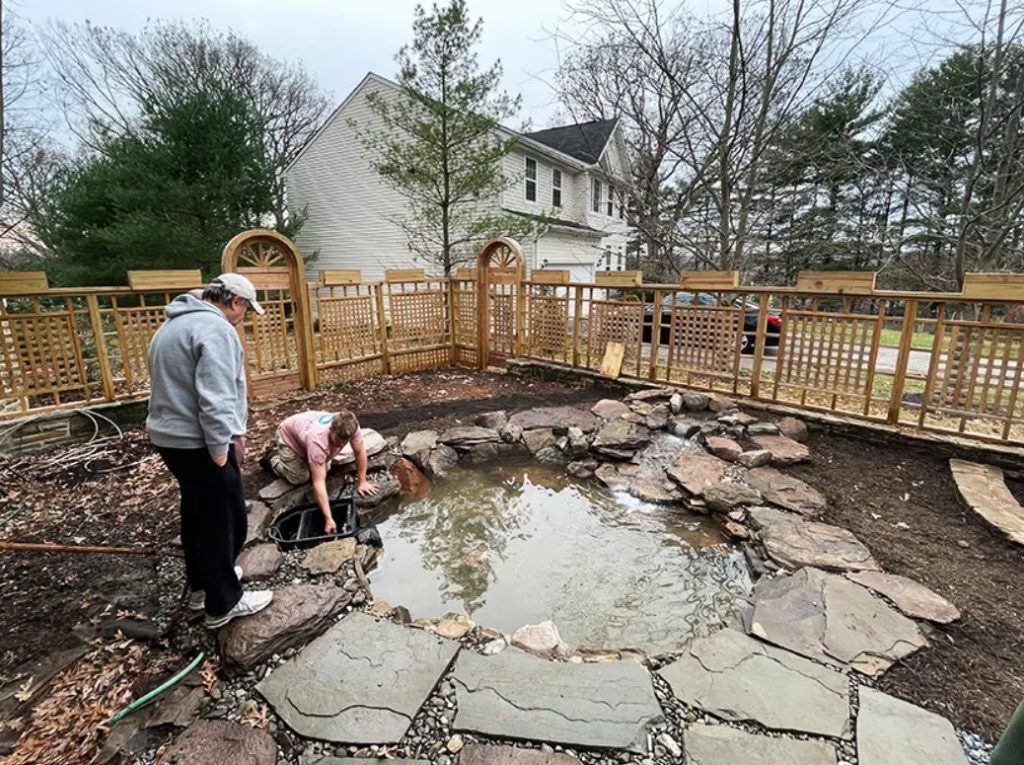
A koi pond is a living water system, not a decoration you can set and forget. It holds water under constant pressure, runs electrical equipment daily, and supports fish that depend on stable water conditions. When a problem starts, it rarely stays small. A tiny leak can become a soaked garden edge, a stressed pump, and a sudden water quality crash. A worn liner edge can lead to silent water loss, then a fish health issue, then a rushed repair.
That is why so many pond owners search pond expert near me when they notice dropping water levels, damp soil around the pond, cloudy water that will not clear, or equipment that seems to be struggling. This article explains how a local specialist approaches koi pond repairs, leak detection, liner fixes, and upgrades, with a focus on long term reliability and koi safety.
Why Koi Ponds Develop Leaks and Recurring Problems
Most koi pond failures follow predictable patterns. The pond is exposed to sun, heat, rain, and seasonal temperature swings. Rocks shift over time. Soil settles. Plumbing joints loosen with vibration. Leaves and fish waste break down into sludge. Then the pond starts showing symptoms.
A pond expert near me typically looks at the full system, not just the most visible problem. The goal is to identify the true cause of failure, fix it correctly, and reduce the chance that the same issue returns within months.
Common triggers that lead to repairs
Koi ponds often need repair work because of these conditions.
- Edges were not properly secured, so water escapes when soil settles
- Sharp rocks or roots sit beneath the liner and cause slow punctures
- Waterfall or stream rocks shift and push water outside the liner path
- Skimmer gaskets age and start seeping behind the faceplate
- Underground plumbing joints crack, especially after winter freezing
- Filter capacity is too small, so waste accumulates and water quality swings
- The pond has grown in fish load, but the system stayed the same size
The First Step: Confirming It Is a Leak, Not Evaporation
Many pond owners fear a leak when water drops in hot weather. Some water loss is normal, especially with wind, strong sun, and splashing waterfalls. A pond expert near me usually confirms the difference before any repair work begins, because the wrong assumption wastes time and money.
A simple but accurate check
A basic approach is to compare pond water loss to a container of water placed near the pond. If the pond level drops faster than the container under the same weather conditions, a leak is likely. If the drop matches, evaporation is the bigger factor.
Even when evaporation is the cause, a specialist can still help by adjusting waterfall splash, improving shade, and tuning flow patterns to reduce loss.
How a Specialist Locates the Real Leak Source
Leak detection should be systematic. Random patching often fails because the leak is not where it appears to be. Water can travel underground, reappearing far from the true source. A pond expert near me typically isolates sections of the system to identify whether the leak is in the pond body, the plumbing, the filtration area, or the waterfall route.
The typical leak detection method
Observe the stopping level
A powerful clue is where the water stops dropping. If the pond drains to a certain point and then stabilizes, the leak is often at that height. That points to a seam, a fold, a fitting, a skimmer opening, or a liner edge issue at the same level.
Separate the pond from the plumbing
Many leaks are not in the liner. They occur in pipes, fittings, valves, or filter housings. A pond expert near me may run the system in stages.
- Run everything as normal and measure loss over a set time
- Turn off the pump and measure loss again
- Run the pump without the waterfall or stream
- Temporarily cap or bypass specific lines
If the loss changes dramatically after isolating a component, the problem is usually in that section.
Inspect high risk leak zones
Certain areas fail more often than others.
- Skimmer faceplate and gasket
- Waterfall weir and spillway liner folds
- Return fittings and bulkhead seals
- Bottom drain dome connections
- Liner edges under coping stones
- Hidden folds where debris collects and creates pressure points
Use careful testing when needed
If visual inspection is not enough, a specialist may use controlled dye testing in still water, or they may pressure test plumbing lines. The key is to avoid guesswork and confirm the leak path.
Liner Fixes That Last Beyond One Season
Not all liner damage is equal. A pinhole puncture is different from a stressed seam. A liner tear under stonework is different from a crack near a waterfall edge. A pond expert near me typically chooses repair methods based on liner type, movement in the area, and exposure to heat and UV.
Repairing flexible rubber liners
A strong patch repair usually depends on four essentials.
Surface preparation
The liner must be cleaned thoroughly and dried. Algae film and fine grit can prevent bonding. Proper preparation is often the difference between a patch that lasts weeks and a patch that lasts years.
Patch sizing and overlap
A patch should be larger than the damaged area by a generous margin. Larger overlap spreads stress and reduces edge peel.
Correct adhesive and primer choice
Liner material matters. Using the wrong adhesive can cause failure even if the patch looks perfect at first.
Cure time and pressure
Patches need correct pressure and cure time. Rushing this step is a common reason repairs fail and leaks return.
Repairs for rigid liners and concrete ponds
Rigid ponds require different solutions.
- Preformed shells may require resin repair and reinforcement
- Fiberglass repairs often need surface grinding and layered resin application
- Concrete ponds may need crack treatment, proper waterproof coatings, or structural review if settlement is involved
A pond expert near me will usually assess whether a crack is cosmetic or structural before deciding on a fix.
When the Leak Is Not the Liner
Many owners assume the liner is failing, but leaks often come from equipment connections or water routing.
Skimmer and intake leaks
Skimmer leaks often occur behind the faceplate where the gasket sits. Over time, gaskets compress, screws loosen, and small gaps appear. A proper fix typically involves reseating the faceplate, installing a fresh gasket, and tightening hardware evenly.
Filter bay leaks and overflow
A filter area can appear to leak when it is actually overflowing because of clogged media or incorrect water level control. The ground stays wet and the pond drops, but the issue is a flow imbalance rather than a hole.
Plumbing leaks
Underground pressure lines can crack. Freeze cycles can split fittings. Vibration can loosen unions. A specialist may isolate and test each line rather than digging blindly.
Waterfall and stream losses
Streams lose water when rocks shift or algae redirects flow outside the lined channel. Splash out also causes slow losses that look like liner leaks. Repairs often involve resetting rockwork and making sure the liner path extends higher than the water route.
Koi Safe Repair Practices That Protect Fish Health
Repair work should never put koi at risk. Many sealants and cleaning agents are not fish safe. Sudden water changes and reduced oxygen can stress fish even if no toxins are introduced. A pond expert near me plans repairs to maintain stable conditions.
Fish protection steps used during repairs
- Maintain aeration if pumps are shut down
- Keep repair chemicals isolated from pond water until fully cured
- Reduce feeding temporarily to limit waste load
- Monitor ammonia and nitrite after restarting systems
- Avoid rapid temperature swings during water level changes
- Use gentle handling if fish must be moved
Deeper insight: stress is often the real danger
Koi health problems after repairs are often stress based. Loud disruption, oxygen drops, and sudden water chemistry changes can weaken immunity. A skilled specialist focuses on keeping conditions steady, not just stopping the leak.
Upgrades That Prevent Repeat Repairs
Many koi pond repairs reveal a bigger issue. The pond may be undersized for the number of koi. The filtration may be too small for the feeding level. Flow may be weak, allowing sludge to accumulate. Edges may be unstable, causing repeated liner shifts.
A pond expert near me often recommends upgrades that solve the root cause rather than repeating the same patch every season.
The most valuable koi pond upgrades
Improved mechanical filtration
Better solids removal means less waste dissolving into the pond. This reduces algae pressure, sludge formation, and odor. It also reduces the load on biological filtration.
Expanded biological filtration
High surface area media supports stable beneficial bacteria colonies. This helps keep ammonia and nitrite near zero, especially in summer when feeding increases.
Better circulation and return placement
Dead zones create bottom sludge. Strategic returns, adjusted flow patterns, and improved turnover rate move debris toward collection points.
Modernized plumbing and pump efficiency
Correct pipe sizing, fewer sharp bends, and properly matched pumps improve flow while reducing strain and power use.
Edge rebuild and liner rework
If the liner edge is failing, rebuilding coping stones and regrading surrounding soil can stop hidden water loss and dramatically improve the pond’s appearance.
How to Choose the Right Local Specialist
A koi pond is more demanding than a simple garden pond. The specialist you hire should understand fish health, water quality, and system engineering, not just landscaping.
Questions that help you select well
- How do you confirm whether the leak is in the liner or plumbing
- Which repair products do you use and are they fish safe
- Do you test water parameters before and after the job
- Can you explain how filtration capacity should match fish load
- How do you protect koi during drain down and restart
- What warranty do you provide on repair work
- Can you show examples of similar koi pond repairs and upgrades
A pond expert near me should be able to explain the logic behind each step. Clear reasoning is a strong sign of real experience.
What Affects Repair and Upgrade Costs
Repair costs vary because access and complexity vary. A small patch on an exposed liner can be quick. A buried plumbing leak can require careful excavation. A waterfall rebuild can involve moving heavy stonework.
Common price drivers
- Leak location and ease of access
- Need to lower water or move koi temporarily
- Type of liner and availability of matching repair materials
- Amount of rockwork that must be removed and reset
- Whether plumbing is buried and how deep it runs
- Whether upgrades are added during the same service visit
Bundling upgrades with repairs can be cost efficient, since the pond is already being opened and inspected.
How to Reduce the Chance of Future Leaks
Even the best repair can fail if the conditions that caused damage remain. Prevention keeps a koi pond stable and reduces emergency calls.
Practical prevention habits
- Secure rockwork so it cannot shift onto the liner
- Protect liner edges from direct sun exposure
- Keep debris out so sludge does not build along folds
- Check skimmer gaskets and return fittings seasonally
- Winterize exposed plumbing in cold weather regions
- Keep flow strong enough to prevent bottom settling
- Maintain filtration so waste is exported early
Conclusion
When you search pond expert near me for koi pond repairs, you are usually looking for more than a quick patch. You want a leak fixed correctly, a liner edge secured, plumbing restored, and the pond made reliable again. The best specialists diagnose the system methodically, protect koi during repairs, and recommend upgrades that prevent repeat failures. With the right repair approach and smart improvements to filtration and circulation, a koi pond can return to being what it should be: stable, clear, and easy to enjoy.
Frequently Asked Questions
How do I know if my pond leak is serious
If the water level drops quickly, if you see wet soil around the pond, or if the level stops at a specific point and keeps repeating, a leak is likely and should be diagnosed before it worsens.
Can I patch a koi pond liner myself
Small punctures can be patched successfully if you use the correct materials and preparation steps. Many repeat leaks happen when cleaning, drying, overlap sizing, and cure time are rushed.
Do I need to drain the whole pond to fix a leak
Not always. Many repairs only require lowering the water below the damaged area. Some plumbing and skimmer repairs can be done with partial isolation.
Are liner repair adhesives safe for koi
Some are fish safe when fully cured, but not all products are appropriate. A pond specialist chooses materials designed for pond environments and follows cure times carefully.
Which upgrades help most after frequent pond problems
Better mechanical filtration, stronger biological capacity, improved circulation, and a secure liner edge are often the most impactful upgrades for reducing maintenance and preventing recurring issues.