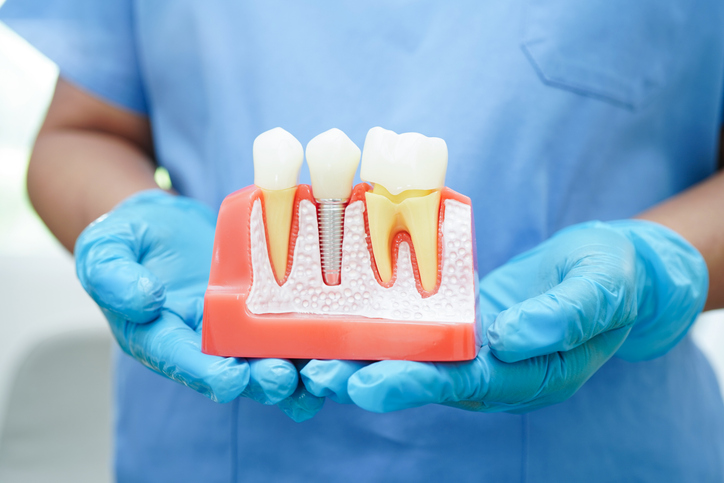
Missing teeth can change how you eat, speak, and even how you relate to your own family. You might chew on one side. You might avoid certain foods. You might hide your smile at the table. Dental implants give you a firm, steady base so you can use your mouth with strength again. They help you trust your bite. They help you form words clearly. They help you share meals without fear or shame. Grand Rapids dentists use implants to restore function, not just looks. This matters for every age. A child who lost a front tooth in an accident. A parent who lost a molar to decay. A grandparent with slipping dentures. Each person needs to eat, talk, and smile without pain or worry. This blog explains five clear ways implants support daily life for your whole family.
1. You chew food with strength and balance
Chewing should feel simple. Missing teeth force you to work around gaps. You might swallow larger pieces of food. You might avoid meat, nuts, or crisp fruits. Over time this strains your jaw and can upset your stomach.
Implants act like sturdy roots. They hold a crown that stays in place when you bite. You can use both sides of your mouth. You can cut and grind food instead of mashing it with your tongue or front teeth.
This helps you and your family:
- Eat a wider mix of foods
- Take smaller bites and chew longer
- Reduce jaw soreness from overuse on one side
The National Institute of Dental and Craniofacial Research explains that tooth loss affects how well you chew and what you eat.
2. You speak more clearly and feel less self conscious
Teeth help shape sounds. Missing teeth, especially in the front, can change how you say words with “s,” “f,” or “th.” You might notice a lisp. You might slur or whistle. Children can feel teased. Adults may pull back in meetings or social events.
Implants fill the empty space. The crown is fixed, so it does not slip like some dentures. Your tongue and lips can touch the tooth in a steady way. This supports clearer speech.
Clear speech helps you:
- Read aloud with your child without worry
- Speak up in class or at work
- Join family talks without hiding your mouth
You gain control over your words again. That control can ease stress for both children and adults.
3. You protect your jawbone and face shape
When a tooth is lost, the jawbone under that tooth starts to shrink. The bone no longer gets the pressure it needs from chewing. Over time this can change the shape of your face. Your cheeks can look more sunken. Your bite can collapse.
Implants connect to the bone. They share chewing pressure with the jaw. This helps slow the bone loss that often follows missing teeth.
The American Dental Association explains that implants can help keep the jawbone from shrinking after tooth loss.
For your family this means:
- More stable bite for growing teens
- Less facial change for adults over time
- Better support under dentures or partials if used with implants
This protection is not about looks alone. It is about keeping a solid base for chewing and speaking for many years.
4. You gain comfort compared to removable options
Removable dentures and partials can help. Yet they often move. They can rub the gums and cause sore spots. You may need pastes or adhesives to keep them in place.
Implants feel closer to natural teeth. The crown does not come out during daily use. You can bite into many foods without the fear that your teeth will shift.
Here is a simple comparison.
| Feature | Implants | Removable Dentures |
|---|---|---|
| Stability while chewing | Fixed in bone. Very steady | May slip or rock |
| Effect on jawbone | Helps maintain bone height | Does not stop bone loss |
| Speech | Feels close to natural teeth | May affect “s” and “f” sounds |
| Daily cleaning | Brush and floss like teeth | Remove and clean outside the mouth |
| Comfort on gums | No direct rubbing on soft tissue | Can cause sore spots |
For a grandparent, this comfort means longer visits, shared meals, and time with grandkids without denture worries. For a parent, it means less mouth pain while working and caring for children.
5. You simplify daily care while protecting the rest of your teeth
Missing teeth can shift your bite. Neighbor teeth may tilt into the space. The tooth above or below can grow longer into the gap. This makes cleaning hard. Food traps more easily. Cavities and gum problems can follow.
Implants fill the gap and help keep other teeth in place. You clean around them with a brush and floss like natural teeth. There is no need to remove them at night.
This helps your family:
- Keep a clear routine for brushing and flossing
- Reduce food traps that cause bad breath
- Limit extra stress on neighbor teeth
The Centers for Disease Control and Prevention explain that simple habits like brushing twice a day and cleaning between teeth help prevent decay and gum disease.
Helping your family move from strain to strength
Tooth loss touches more than your smile. It affects how your family eats, talks, and connects. Implants give a strong base so each person can use their mouth with confidence.
You can think in three steps.
- Notice where missing teeth limit daily life
- Ask a dentist if implants are safe for your health and age
- Plan for care and follow up visits to keep implants clean
Children, parents, and grandparents all deserve to share meals, stories, and laughter without fear of loose teeth or sore gums. Implants are one clear way to restore that simple freedom.