There is a moment every Magic: The Gathering player knows. You are deep into a Commander game. The battlefield is loaded. You reach to grab a card and it skips sideways across the bare table, flipping face-up in front of three opponents. Your sleeve is scuffed. Your shuffle felt wrong for the last twenty minutes. And somewhere in the back of your mind you know the problem is not your deck. It is what your deck is sitting on. Players who have seriously upgraded their setup know that mtg playmats are not a cosmetic luxury. They are performance infrastructure. The right mat controls friction, protects your cards, and defines your play zone with the kind of intentionality that serious games demand.
The tabletop gaming market crossed $12 billion globally in recent years, according to market research tracked by Statista, and Magic: The Gathering alone accounts for a staggering portion of that spend. Yet a surprisingly large number of players invest hundreds of dollars in cards and almost nothing in the surface those cards live on. This guide breaks that logic open. By the end, you will know exactly what separates a mat worth buying from one that quietly destroys your sleeves and your composure.
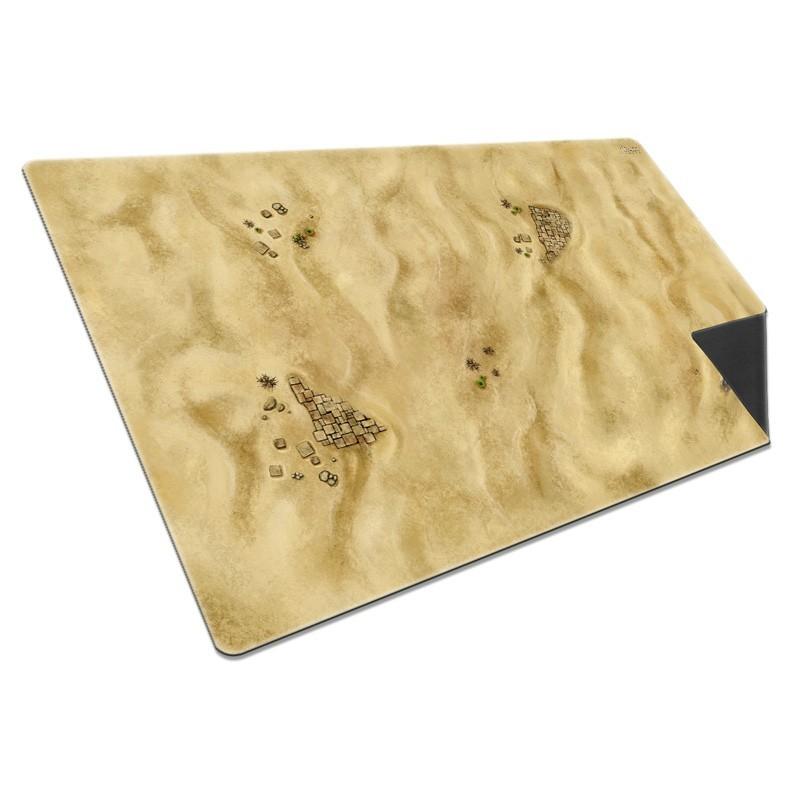
Cheap Mats Are Destroying Sleeves Across North America
Here is a claim that sounds dramatic until you think about it for thirty seconds. A low-quality mat with an unfinished surface creates micro-abrasion on every card you slide across it. Multiply that by a typical Commander game of roughly 60 turns, across a Friday Night Magic season, and you are sanding your sleeves down over dozens of hours of play.
Sleeve manufacturers specify surface compatibility in their documentation for a reason. Dragon Shield, one of the most referenced sleeve brands in the competitive community, notes that surface texture interacts directly with sleeve longevity. A rough or inconsistently surfaced mat increases wear at a rate that smooth, purpose-built cloth surfaces simply do not.
The human version of this problem looks like a player at a local game store pulling a double-sleeved Black Lotus proxy out of a warped, peeling mat, watching the outer sleeve split at the corner. That player spent $40 on sleeves. The mat cost $8 on a general marketplace. The math was always going to go wrong.
Materials Matter More Than the Box Art Suggests
Most budget mats skip the technical details entirely. So here they are.
The base layer is rubber. Natural rubber grips better, lasts longer, and resists curling more effectively than synthetic alternatives. Thickness matters too. Mats under 1.5mm compress quickly under repeated use and start curling at the edges within months. Tournament-grade mats typically run 2mm or thicker. That extra half-millimeter is not marketing. It is the difference between a mat that lies flat and one that becomes a ramp after six months.
The surface fabric is where most budget mats fail even faster. Smooth microfiber cloth moves cards cleanly and reduces shuffle resistance without creating the micro-abrasion problem mentioned above. Printed surfaces on cheap mats tend to fade and develop uneven texture as the ink layer breaks down. You will notice this first in feel, then in color, usually right after the return window closes.
Edge stitching is the clearest visible signal of build quality. A stitched perimeter holds the rubber and fabric layers together under repeated rolling and unrolling. Raw-cut edges begin separating after a few months of regular transport in a bag. If a mat does not advertise stitched edges, assume it does not have them.
The Cost-Per-Use Reality Check
A $15 mat that lasts eight months costs you roughly $0.06 per game night assuming weekly play. A $35 premium mat lasting three years costs about $0.02 per game night. The budget option is more expensive over time. That is before you factor in the sleeve replacement cost it drives.
Size Gets Overlooked Until It Ruins a Game
Standard individual MTG mats run approximately 24 inches by 14 inches. That gives you enough room for a hand, a battlefield, a graveyard, and an exile zone without cards constantly drifting off the protected surface. Go smaller and you are making constant micro-adjustments throughout the game. That is cognitive load you do not need in a four-player Commander pod.
Extended mats exist for a reason. If you host Commander nights at home or play at content-creator setups, a larger surface creates a unified aesthetic and keeps everyone’s zones cleanly defined. The tradeoff is portability. A mat you cannot roll and transport easily does not make it to the game store.
The practical recommendation: individual 24×14 for competitive formats and store nights, extended or dual-player size for dedicated home setups. Know which environment you are buying for before you click purchase.
Custom Playmats Changed What Players Expect From Their Setup
Five years ago, custom playmats were a niche product for tournament grinders with sponsor relationships. That is no longer true. On-demand printing technology now lets any player upload their own artwork and get a production-quality mat shipped to their door.
This matters for several reasons beyond aesthetics. A custom mat tied to your Commander deck’s theme creates a cohesive table presence that communicates how seriously you take your setup. Players at local game stores consistently report that a distinctive mat opens more conversations than almost any other piece of gear. It signals investment and intention.
What to verify before ordering custom: resolution requirements (typically 300 DPI minimum for crisp print quality), the rubber base grade used for custom printing versus standard production, and whether edge stitching is applied to custom orders the same way it is on standard products. Some vendors cut corners specifically on custom items. Look for explicit confirmation in the product description.
Nerd Gear produces its custom print TCG playmats on-demand at their Canadian facility with the same build standards as their standard lineup. That consistency matters. It is easy to find vendors who offer custom printing. It is harder to find ones who maintain material quality when production moves in-house.
The David Lozeau artist collaboration series is worth mentioning separately. These are original commissioned works, not card reprints or stock art. The difference is immediately visible at the table. Artist series mats bridge the gap between collectors and players in a way that generic art does not. If you want something that holds up functionally and stands out aesthetically, that intersection is where premium playmats now live.
The Accessories Your Mat Cannot Work Without
A playmat does not function in isolation. The gear around it either completes the setup or creates friction you will notice every session.
Sleeve quality is the first complementary decision. Rock Guard sleeves, for example, are designed with a textured exterior that improves grip during shuffling without adding drag on a smooth mat surface. The interaction between sleeve texture and mat surface is real. Smooth sleeves on a smooth mat can feel slippery. Textured sleeves on a smooth mat hit the balance most players prefer.
Life counters deserve more thought than most players give them. Spin-down dice get bumped, lost, and misread under stress. A dedicated physical life counter keeps everyone’s totals visible and reduces the “wait, what was my life total” interruptions that slow late-game Commander turns. The LifeTrax Counter format tracks life totals across the full 40-life Commander range without requiring a phone or app.
Dry-erase tokens solve a problem token-heavy decks create every session. Searching through a pile of paper tokens for the right creature type mid-combat is friction you just do not need. Extra-thick dry-erase tokens like Nerd Gear’s NerdTokens let you write exactly what you need in the moment and wipe it clean between games.
The Commander Essentials Kit packages life counters, dice, tokens, and supporting accessories as a cohesive set. For players building their setup from scratch, that eliminates the compatibility guesswork that comes with buying individual pieces from different brands. The Playmat Sanctuary storage solution pairs directly with this approach. It protects your mat during transport and keeps your full setup consolidated in one organized carry.
How to Know If a Seller Is Actually Worth Trusting
The MTG accessories market has a trust problem. General marketplaces host thousands of vendors with inconsistent quality and no accountability after the sale. Players have learned this the hard way, often after a mat arrives curled in its packaging and the return process turns into a three-week email chain.
Third-party review platforms like Judge.me exist specifically to address this. Platinum-rated status on Judge.me requires a sustained volume of verified reviews, not a one-time batch of incentivized responses. Top 5% ranking across the full vendor pool is a signal based on review consistency, response rate, and return handling. Nerd Gear carries both designations with 879 or more verified reviews as of recent reporting. That is not a marketing claim. It is an auditable track record.
Shipping infrastructure is the second trust signal most buyers overlook. Dual warehouses in the US and Canada mean duty-free delivery to North American addresses without the cross-border delays that single-warehouse international operations create. For Canadian players especially, buying from a brand with domestic fulfillment eliminates the hidden cost and wait time that makes cheaper mats less cheap in practice.
Return policy terms tell you how a brand actually feels about its products. A no-questions-asked policy with covered return shipping is a confident statement. It says the brand believes in its quality enough to absorb the cost of the rare exception. Generic marketplace sellers rarely offer this because their margins and operational structures cannot support it. Specialized TCG accessory brands that do offer it are worth noting.
The Questions Worth Asking Any Seller Before You Buy
- Does the product page explicitly describe edge stitching and rubber base thickness?
- Are reviews verified by a third-party platform, or are they on-site only?
- Does the seller stock a full ecosystem of complementary accessories, or just mats in isolation?
- What is the actual return process, and who covers shipping?
- For custom orders: are the material standards the same as standard production?
If a seller cannot answer those questions clearly in their product copy, that silence is itself an answer.
Build Your Setup Right the First Time
The players who get the most out of Magic: The Gathering are not always the ones with the most expensive decks. They are the ones whose setup removes friction. Every turn flows cleanly. Every card is protected. Every life total is visible. The table communicates that this person knows what they are doing.
That setup starts with a mat that is built to perform and built to last. It extends through sleeves, life counters, tokens, and deck storage that work together rather than against each other. And it depends on buying from a seller with a track record you can verify, fulfillment that actually reaches you fast, and a return policy that removes the risk entirely.
The budget option is almost never actually the budget option when you count the total cost over time. Buy the right gear once. Play better games.