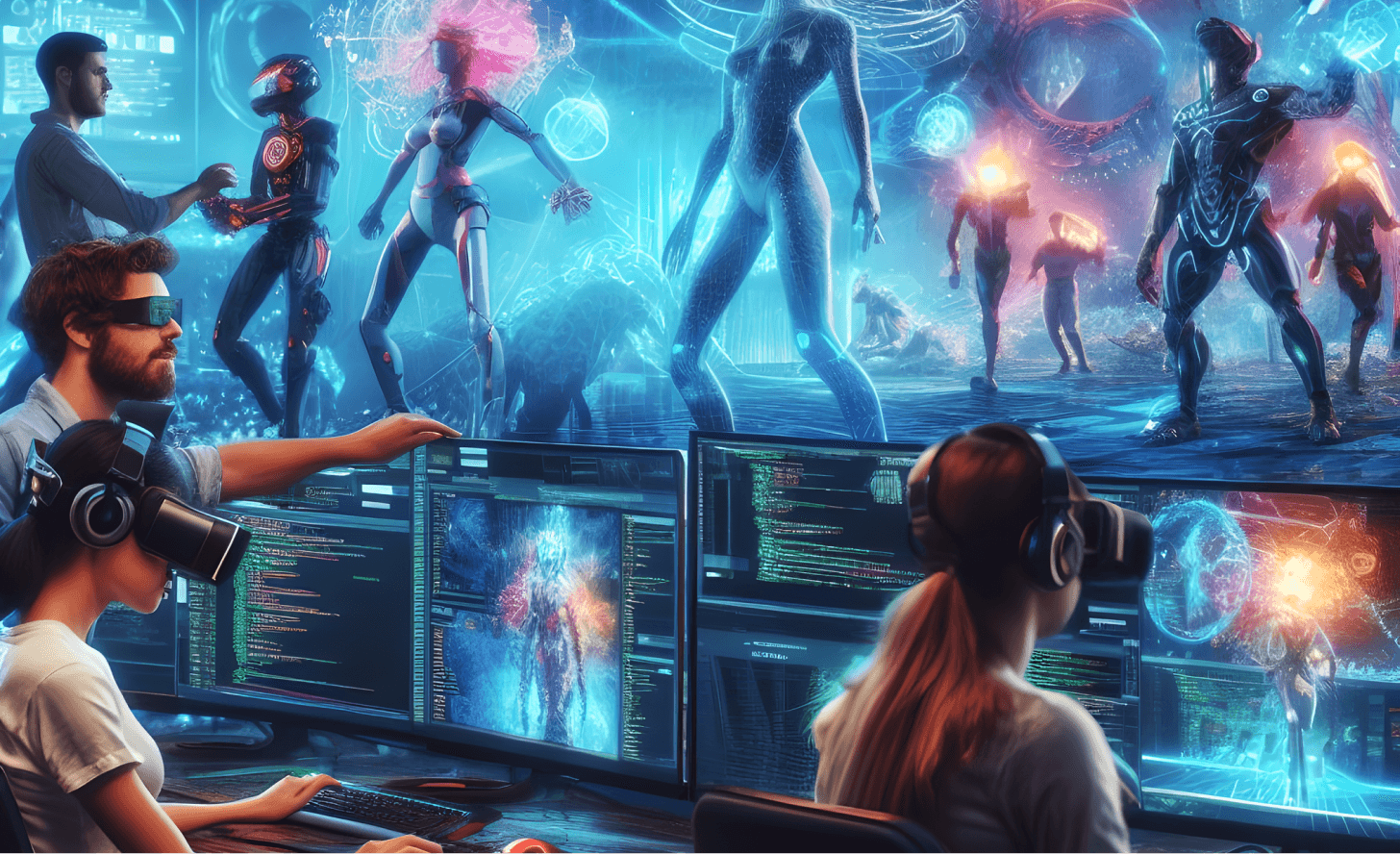
Virtual Reality (VR) and Augmented Reality (AR) are the next frontiers of interactive entertainment, but they require incredible processing power and sophisticated spatial understanding to feel realistic. The purpose of integrating gaming AI tools into VR/AR is to bridge the gap between the physical and digital worlds. AI handles the complex tasks of “inside-out tracking,” allowing headsets to know exactly where they are in a room without external sensors. It also powers “hand tracking,” using computer vision to turn the player’s real hands into their digital controllers. Without AI, the immersion of VR would be broken by lag, inaccurate movement, and a lack of physical interaction.
The target audience for VR/AR AI includes hardware developers, immersive game designers, and enterprise training specialists. For designers, AI provides the tools to create “physics-based interactions” that feel natural—such as picking up a virtual cup or throwing a digital ball. For training specialists, AI-driven VR allows for the simulation of high-stakes environments—like surgery or emergency response—where the AI can provide real-time feedback on the trainee’s movements and decisions. AI is the “brain” that makes these virtual worlds feel solid and responsive to the player’s physical presence.
The benefits of AI in spatial computing are focused on comfort and realism. One of the biggest challenges in VR is “motion sickness,” which is often caused by a delay between a player’s movement and the display update; AI can predict head movements to eliminate this delay. Secondly, AI can “reconstruct” the player’s physical room in real-time for AR gaming, allowing digital characters to hide behind real sofas or jump over real coffee tables. This “spatial awareness” makes the game world feel like an extension of our own reality. This high level of technical polish is what moves VR from a niche gimmick to a mainstream medium.
Usage involves a combination of on-device neural processing and cloud-based world mapping. The AI continuously analyzes camera data from the headset to build a “point cloud” of the environment. In a game, the AI uses this data to ensure that digital objects respect the laws of physics and the boundaries of the real room. To explore how these spatial and visual capabilities are being used in entertaining AI apps for home design and virtual tours, you can check the links in our catalog. AI is the key that is finally unlocking the true potential of the metaverse.